

Curious about 'What is a bone stimulator?' Learn how this medical device accelerates fracture healing and supports recovery for nonunion fractures. Conta...
Can A Bone Stimulator Heal A Fracture Faster?
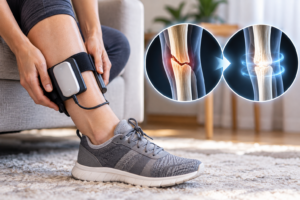 When recovering from a broken bone, many patients ask their doctors, can a bone stimulator heal a fracture faster? This question is particularly relevant for individuals dealing with slow-healing injuries or complex fractures that resist traditional healing methods. Consequently, understanding this technology is crucial for making informed decisions about your recovery. A bone stimulator is a prescribed medical device designed to support the body’s natural healing process, especially in challenging situations. Furthermore, this guide will explore the science, application, and effectiveness of bone stimulation in modern orthopedic care.
What Exactly Is a Bone Stimulator?
A bone stimulator is a device that delivers targeted energy to a fracture site to encourage bone growth and fusion. Importantly, it is a non-invasive or minimally invasive treatment option prescribed by a healthcare professional. Instead of accelerating a perfectly normal healing timeline, its primary purpose is to ‘jump-start’ or support healing in bones that are struggling to mend on their own. For a foundational understanding, it’s helpful to explore what a bone stimulator is in greater detail. These devices typically use either low-level electrical fields or ultrasonic waves to mimic the body’s natural healing signals, thereby promoting cellular activity at the fracture site.
The Big Question: Can a Bone Stimulator Heal a Fracture Faster?
The direct answer to the question, can a bone stimulator heal a fracture faster?, requires some nuance. For a simple, uncomplicated fracture in a healthy individual, the bone will likely heal within a predictable timeframe without intervention. In this scenario, a bone stimulator may not significantly ‘speed up’ the process. However, its true value emerges when dealing with fractures at high risk of non-union (failure to heal) or delayed union (healing slower than expected). For these patients, a bone stimulator can be the critical factor that prevents the need for additional surgery. Therefore, it doesn’t just make the fracture heal faster; it helps ensure that it heals at all. The technology is designed to overcome biological roadblocks to recovery.
How Do These Devices Promote Healing?
Bone stimulators work by delivering specific types of energy to the fracture site, which encourages the cellular processes involved in bone repair. There are three primary technologies used today, each with a unique mechanism of action.
Low-Intensity Pulsed Ultrasound (LIPUS)
LIPUS devices use high-frequency sound waves to create mechanical pressure on the bone. This gentle stress stimulates bone cells (osteoblasts) to become more active, increasing the production of the materials needed to form a hard callus and bridge the fracture gap. As a result, this process can enhance multiple stages of bone repair. Patients typically apply the device for about 20 minutes per day.
Pulsed Electromagnetic Fields (PEMF)
PEMF technology utilizes a coil placed over the fracture site to generate a low-level electrical field. This field mimics the natural electrical signals produced by the body during bone healing. According to research published by the National Institutes of Health, these fields can influence cell behavior, promoting the differentiation of stem cells into bone cells and enhancing the formation of new bone tissue. This method is completely painless and is often used for several hours each day.
Capacitive Coupling (CC)
Capacitive Coupling is another electrical stimulation method. It involves placing two skin electrodes on opposite sides of the fracture. A small electrical current is passed through the bone, which similarly stimulates cellular activity and supports the healing cascade. This approach is also prescribed for daily use and is effective for certain types of fractures.
What Types of Fractures Benefit Most from a Bone Stimulator?
A doctor will recommend a bone stimulator based on the type of fracture and the patient’s overall health profile. It is not a standard treatment for every broken bone. Specifically, the device is most effective in the following situations:
- Non-Union Fractures: This is the primary indication. When a bone has failed to show any signs of healing for several months, a stimulator can reignite the repair process.
- Delayed Union Fractures: If a fracture is healing much more slowly than anticipated, a stimulator can provide the necessary biological boost to get it back on track.
- High-Risk Fresh Fractures: Certain fractures, due to their location (e.g., scaphoid bone in the wrist) or severity, have a high risk of non-union. Additionally, patients with risk factors like diabetes, vascular disease, or those who smoke may be candidates.
- Spinal Fusion Surgery: Orthopedic surgeons often prescribe bone stimulators following spinal fusion procedures to increase the likelihood of a successful fusion between vertebrae.
The Evidence and What to Expect
The use of bone stimulators is supported by numerous clinical studies and is an FDA-approved treatment for specific conditions. For example, the American Academy of Orthopaedic Surgeons notes that these devices are a viable non-operative treatment for non-unions, potentially helping patients avoid more invasive procedures. While success rates are high for indicated uses, it is essential to follow the prescribed treatment plan diligently. Using the device consistently every day for the specified duration is critical for achieving the desired outcome. Ultimately, while it may not make a simple fracture heal in half the time, asking your doctor if a bone stimulator is right for your specific situation is a vital step, especially if you face a complex recovery. The answer to can a bone stimulator heal a fracture faster? truly depends on the unique context of your injury.
Final Thoughts on Bone Stimulation
In conclusion, a bone stimulator is a powerful medical tool for promoting healing in challenging fractures that are not mending properly. While it may not dramatically accelerate the healing of a straightforward break, it is indispensable for treating non-unions and delayed unions, often preventing the need for further surgery. The technology works by mimicking the body’s natural signals to encourage bone cell activity and tissue regeneration. If your doctor has prescribed one of the available bone growth stimulators, it represents a targeted, evidence-based approach to ensure a successful recovery. To learn more about your options and how this technology can help you, contact Xceed Medical to discuss your prescription and get the support you need.
Related Posts
