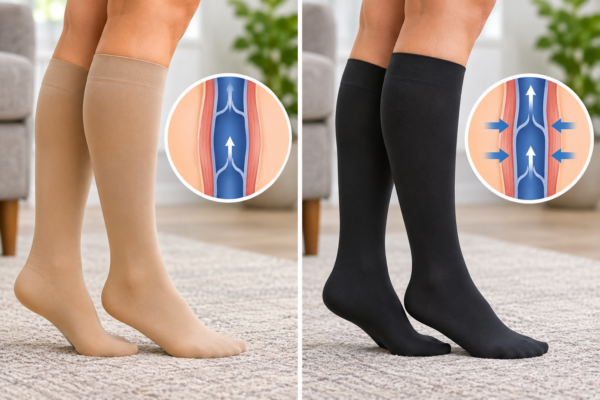

Confused about compression levels? Learn what's the difference between 15-20 mmHg and 20-30 mmHg to choose the right support for your needs. Find your fit!
Is Nighttime Compression Covered By Medicare?
 For many individuals managing chronic conditions like lymphedema or chronic venous insufficiency, the question, Is nighttime compression covered by Medicare?, is a critical financial and health concern. The answer, fortunately, has become much clearer thanks to recent legislation. However, coverage is not automatic and depends entirely on your specific diagnosis, the type of garment prescribed, and adherence to Medicare’s strict guidelines. This guide will break down the current rules, explain the necessary steps for obtaining coverage, and clarify who qualifies under the new provisions.
What Exactly Is Nighttime Compression Therapy?
Before diving into Medicare specifics, it’s essential to understand what makes nighttime compression different. Unlike the elastic, high-compression stockings worn during the day, nighttime garments are specifically designed for use while lying down. Consequently, they typically have lower, static compression levels and are made from thicker, more cushioned materials to prevent skin breakdown during long hours of inactivity. For example, these garments often use foam or chip-filled channels to gently massage fibrotic tissue and encourage lymphatic drainage overnight. This approach is crucial for managing conditions like lymphedema, where fluid can re-accumulate while sleeping. Understanding the purpose of specialized nighttime compression garments is the first step in justifying their medical necessity to insurance providers.
Understanding Medicare’s Coverage for Compression Items
Historically, Medicare’s coverage for compression therapy has been limited. For years, most standard compression stockings and sleeves were not covered because they did not meet the definition of Durable Medical Equipment (DME). Medicare Part B generally covers DME that is necessary for use in the home and can withstand repeated use. Unfortunately, standard gradient compression garments were often excluded, leaving patients to pay out-of-pocket. This created a significant barrier to care for those needing consistent compression to manage their conditions. The primary exception was for specific wound care situations, where multi-layer compression bandages applied by a healthcare professional might be covered as part of a treatment plan for venous stasis ulcers.
The Lymphedema Treatment Act: A Major Shift in Coverage
A significant change occurred with the passage of the Lymphedema Treatment Act, which went into effect on January 1, 2024. This landmark legislation created a new Medicare Part B benefit category specifically for lymphedema compression treatment items. As a result, Medicare now provides coverage for the standard and custom-fitted garments and devices necessary to manage lymphedema. This includes the very items that were previously denied, such as nighttime garments. Importantly, this act directly addresses the needs of lymphedema patients, making effective compression therapy more accessible. This change is a game-changer for millions of beneficiaries.
What Are the Specific Requirements for Medicare Coverage?
While the Lymphedema Treatment Act opened the door for coverage, specific criteria must be met. Simply wanting a garment is not enough; it must be deemed medically necessary. Therefore, to get your nighttime compression garment covered, you must follow a clear process. Failure to meet any of these requirements can result in a denial of your claim.
Here are the essential criteria you must satisfy:
- A Formal Diagnosis: You must have a diagnosis of lymphedema from a qualified healthcare provider (such as a physician, physician assistant, or nurse practitioner). Coverage is specifically for lymphedema, so other conditions like lipedema or uncomplicated venous insufficiency may not qualify under this new rule.
- A Valid Prescription: Your provider must write a detailed prescription for the specific type of compression garment needed, including nighttime garments. The prescription must outline the item, the diagnosis, and why it is medically necessary for your treatment plan.
- Use a Medicare-Enrolled Supplier: The compression garments must be purchased from a Durable Medical Equipment (DME) supplier that is enrolled with and accredited by Medicare. You cannot simply buy a garment online or from a local pharmacy and submit for reimbursement.
- Adherence to Quantity Limits: Medicare has established limits on the quantity of garments a patient can receive. For daytime wear, this is typically three garments per affected body part every six months. For nighttime wear, it is two garments per affected body part every two years.
Key Factors: Is Nighttime Compression Covered by Medicare?
Navigating the process can feel overwhelming, but breaking it down into steps makes it manageable. If you believe you qualify, the first step is always to consult with your healthcare provider. They are your primary advocate in this process. Furthermore, they will provide the necessary diagnosis and documentation to prove medical necessity. Once you have a prescription, you can work with a certified DME supplier who understands the Medicare system. These suppliers can help with choosing the right compression garments and will handle the billing with Medicare directly. Remember, the answer to ‘Is nighttime compression covered by Medicare?’ is yes, but only for patients with a lymphedema diagnosis who follow the correct procedure.
What If My Swelling Is Not Caused by Lymphedema?
This is a common question. For patients with chronic venous insufficiency (CVI), edema, or other circulatory issues not classified as lymphedema, coverage remains more complex. Nighttime compression for these conditions is generally not covered by Medicare. However, some related treatments might be. For instance, if you have active venous stasis ulcers, Medicare may cover certain wound dressings and multi-layer compression bandaging systems as part of the treatment. It is crucial to discuss all options for managing circulation and vein health with your doctor to see what aspects of your care might be covered under different Medicare benefits.
Final Thoughts: Securing Your Compression Coverage
In conclusion, the landscape for Medicare coverage of compression therapy has dramatically improved for lymphedema patients. The Lymphedema Treatment Act ensures that medically necessary garments, including those for nighttime use, are now a covered benefit. The key is to have a confirmed lymphedema diagnosis and a valid prescription from your doctor. By working with a Medicare-enrolled DME supplier, you can navigate the system and receive the items you need to manage your condition effectively. For those with other causes of swelling, it remains vital to explore all treatment options with a healthcare professional. Ultimately, understanding the specific rules is the best way to answer the question, ‘Is nighttime compression covered by Medicare?’ for your unique situation.
Related Posts