

Compression stockings can be an important part of managing leg discomfort, swelling, and circulation-related concerns…
What Is The Best Nighttime Garment For Lymphedema?
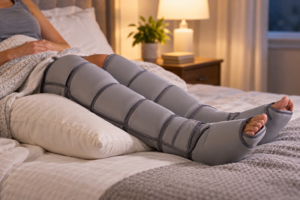 Finding effective ways to manage lymphedema can feel like a constant challenge, especially during the night when swelling can worsen. Therefore, understanding what is the best nighttime garment for lymphedema is a critical step toward better comfort, reduced symptoms, and improved quality of life. Unlike daytime compression, nighttime garments are specifically designed for long periods of rest, providing gentle, consistent pressure to support your lymphatic system while you sleep.
Why Is Nighttime Compression Different from Daytime Wear?
Daytime compression garments are designed for an active body. They provide high pressure to work against muscle movement, pushing fluid out of the limbs. However, wearing these high-compression stockings or sleeves overnight is not recommended and can be unsafe.
Nighttime garments, in contrast, are engineered with a low resting pressure. They are made from softer, more breathable materials with foam or padding. This design ensures they are comfortable enough for extended wear and safe for a resting body. Specifically, their primary goal is to prevent fluid from re-accumulating in the limb overnight, maintaining the progress made during the day.
What Are the Main Types of Nighttime Garments?
The market offers several types of nighttime garments, each with unique features. The right choice often depends on the severity of your lymphedema, personal comfort, and a professional’s recommendation. Importantly, exploring these options can help you find a suitable solution.
Foam-Based Garments
Foam-based garments are a popular choice for overnight use. They feature channels or chip-foam particles sewn into a soft fabric. This design creates a gentle, massaging effect on the skin, which helps to break down fibrotic (hardened) tissue and stimulate lymphatic drainage. Furthermore, they are typically bulky but provide excellent comfort and pressure distribution.
Adjustable Compression Wraps
For those who need more flexibility, adjustable compression wraps are an excellent alternative. These garments use a system of Velcro straps, allowing you to set the precise level of compression needed. As a result, they are easier to put on and take off than traditional stockings. Their adjustability also means they can adapt to daily fluctuations in swelling, providing consistent and customized support.
Inelastic Garments
Inelastic garments provide very high containment when your muscles are moving but very low pressure when you are at rest. This makes them another safe option for nighttime use. They are made from non-stretchy materials and are often used for more severe stages of lymphedema. Consequently, they provide a firm wall for the limb to rest against, preventing expansion and fluid buildup.
How Do You Choose What Is The Best Nighttime Garment For Lymphedema?
Selecting the right garment is a decision that should ideally be made with guidance from a lymphedema therapist or healthcare provider. They can assess your specific condition and needs. However, understanding the key factors involved will empower you to have a more informed conversation and make a better choice.
Consider the following points when making your decision:
- Stage and Severity: Early-stage lymphedema may respond well to a softer foam garment, while more advanced or fibrotic stages might require a more robust wrap or inelastic option.
- Location of Swelling: Garments are available for arms, legs, hands, and feet. Ensure the product you choose covers all affected areas properly.
- Skin Sensitivity: Look for garments made from hypoallergenic, breathable materials to prevent irritation, especially if you have sensitive skin.
- Ease of Use: If you have arthritis or limited hand strength, an adjustable wrap with easy-to-pull straps may be more manageable than a pull-on garment.
- Comfort and Sleep Quality: The best garment is one you will wear consistently. Prioritize a comfortable fit that doesn’t disrupt your sleep.
Tips for Effective Nighttime Management
Once you have your garment, using it correctly is key to achieving the best results. For example, always ensure your skin is clean and dry before putting the garment on to reduce the risk of skin breakdown. If you use lotions, allow them to absorb fully first.
Additionally, consistency is paramount. Wear your garment every night as prescribed by your therapist to maintain reduced swelling levels. Understanding what nighttime compression therapy involves is about creating a routine. This routine is just as important as the garment itself. Remember that these garments, much like daytime compression stockings, lose their elasticity over time and typically need to be replaced every six months to a year to remain effective.
Finally, it’s crucial to seek a professional fitting. An improperly fitted garment can be ineffective or even harmful. A certified lymphedema therapist can take precise measurements and help you order the correct size and type for your body. According to the National Lymphedema Network, proper management is a multi-faceted approach, and correct garment use is a cornerstone of that therapy.
Key Takeaways
Managing lymphedema doesn’t stop when the sun goes down. An effective nighttime routine is essential for controlling swelling and protecting your long-term health. The answer to what is the best nighttime garment for lymphedema is not one-size-fits-all; it depends on your individual clinical needs and personal comfort. By exploring options like foam-based garments and adjustable wraps, and by working closely with a healthcare professional, you can find a solution that provides comfort and effective management through the night. As research from institutions like the National Institutes of Health shows, consistent compression therapy is vital for positive outcomes. Take the next step by discussing these options with your provider to ensure peaceful nights and healthier days. Learn more about how nightwear compression for chronic swelling can be a game-changer in your treatment plan.
Related Posts


